
Mechanical Flapping Crobat (No AMS!)
Peso
201g
Tiempo
8h 55m
Precio
Cotiza este producto por WhatsApp
Contáctanos y te damos el precio según color y acabado
Las dimensiones dependen del diseño. Confirmamos las medidas exactas por WhatsApp.
Descripción
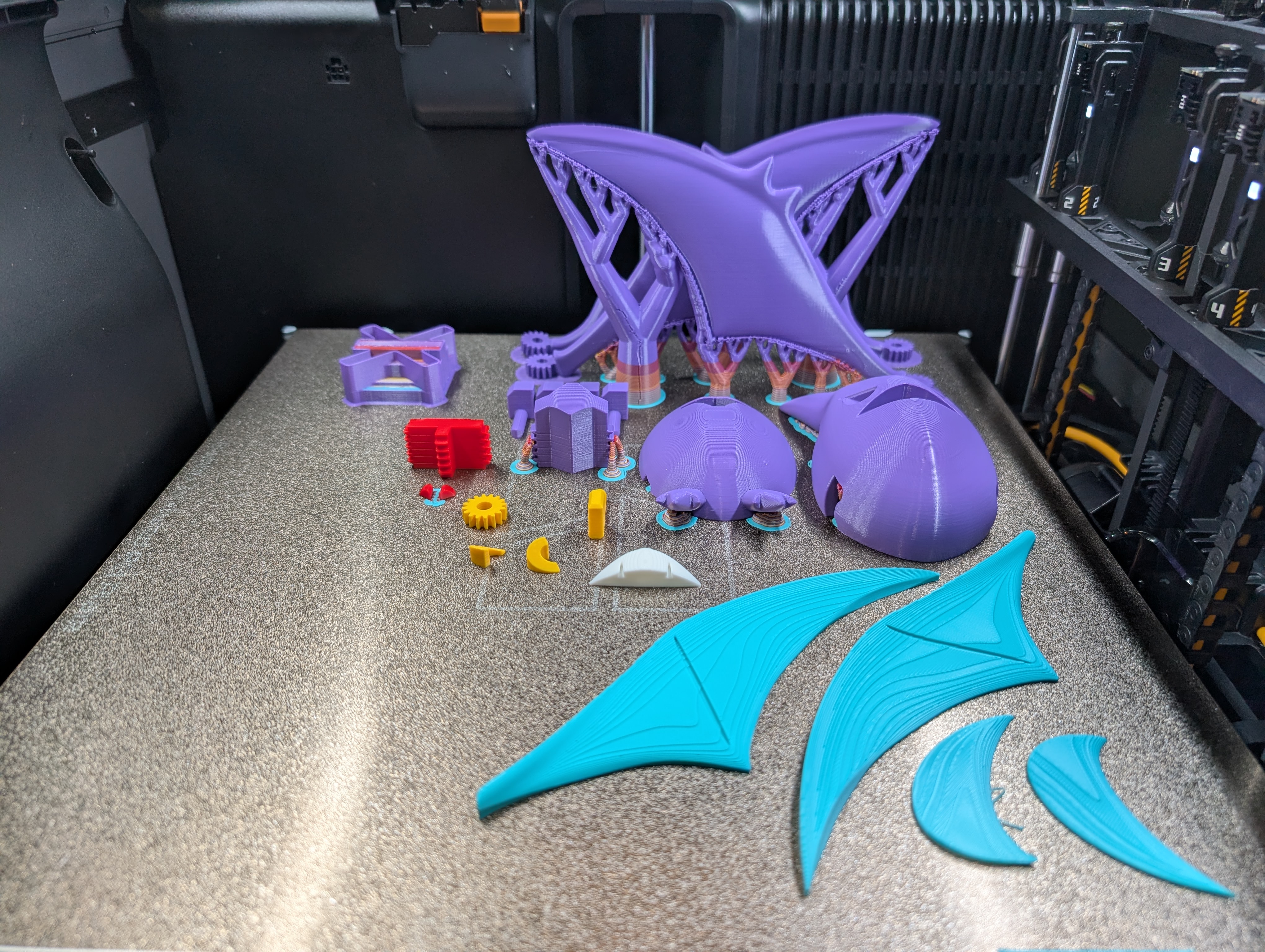
IMPORTANT: Read filament warning at the end before printing Crobat #169: "The development of wings on its legs enables it to fly fast but also makes it tough to stop and rest." ~Silver Version Pokedex entry Crobat is the newest entry in my mechanical pokemon series! This Generation2 favorite made its way onto many Johto teams since zubat were so common. This model flaps when the small panels on the back are pushed in. I wanted to mimic the lore-accurate movement of the wings (flapping alternating directions rather than in unison) so I used a series of gears to alternate the rotational direction of the front and back wings. All mechanical components are housed inside the body and all parts are printed separately by color so there's no need for an AMS. The model has a small channel on the back for thin string or fishing line if you'd like to hang Crobat from the ceiling. The standard model uses buttons that do not protrude from the back of the body, but I've also included extended buttons to make pressing them easier. The only non-printed part is a compression spring (7mm x 0.7mm x 25mm, OD x thickness x length). I decided to shift from the Cilky compression springs I had been using previously towards stronger springs so I'm going to use the Dianrui 300PCS Compression Springs Assortment Kit from Amazon going forward. This spring is optional, it just returns the wings to the resting position faster. The attached assembly guide is critical for easy assembly, the gear racks, axles, and wings need to be oriented and added in a specific order for everything to fit. WARNING: The filament you print this with can make or break the mechanism. I initially printed my prototype in Bambu PLA basic and it worked perfectly. When I used Overture purple PLA, the mechanism started experiencing excessive friction. For weeks I refined and tested the model but was never able to make it work with the Overture filament. I test printed the exact same parts in multiple Bambu PLA basic filaments and tested them in combination with parts printed in the Overture PLA. In all cases, the Bambu Basic PLA pieces worked well and the Overture ones did not. I still don't know exactly what the issue is (if any mechanical engineers out there want have feedback about the mechanism I'm all ears!), I do use Overture regularly and like it, but it just seems like it didn't work for this model. TL/DR: Use Bambu PLA Basic for the mechanical parts Happy printing!
Tags
Diseñador
Bruddz