
ReSpool ScrapeBin - WorkBench
Peso
58g
Tiempo
5h 43m
Precio
Cotiza este producto por WhatsApp
Contáctanos y te damos el precio según color y acabado
Las dimensiones dependen del diseño. Confirmamos las medidas exactas por WhatsApp.
Descripción
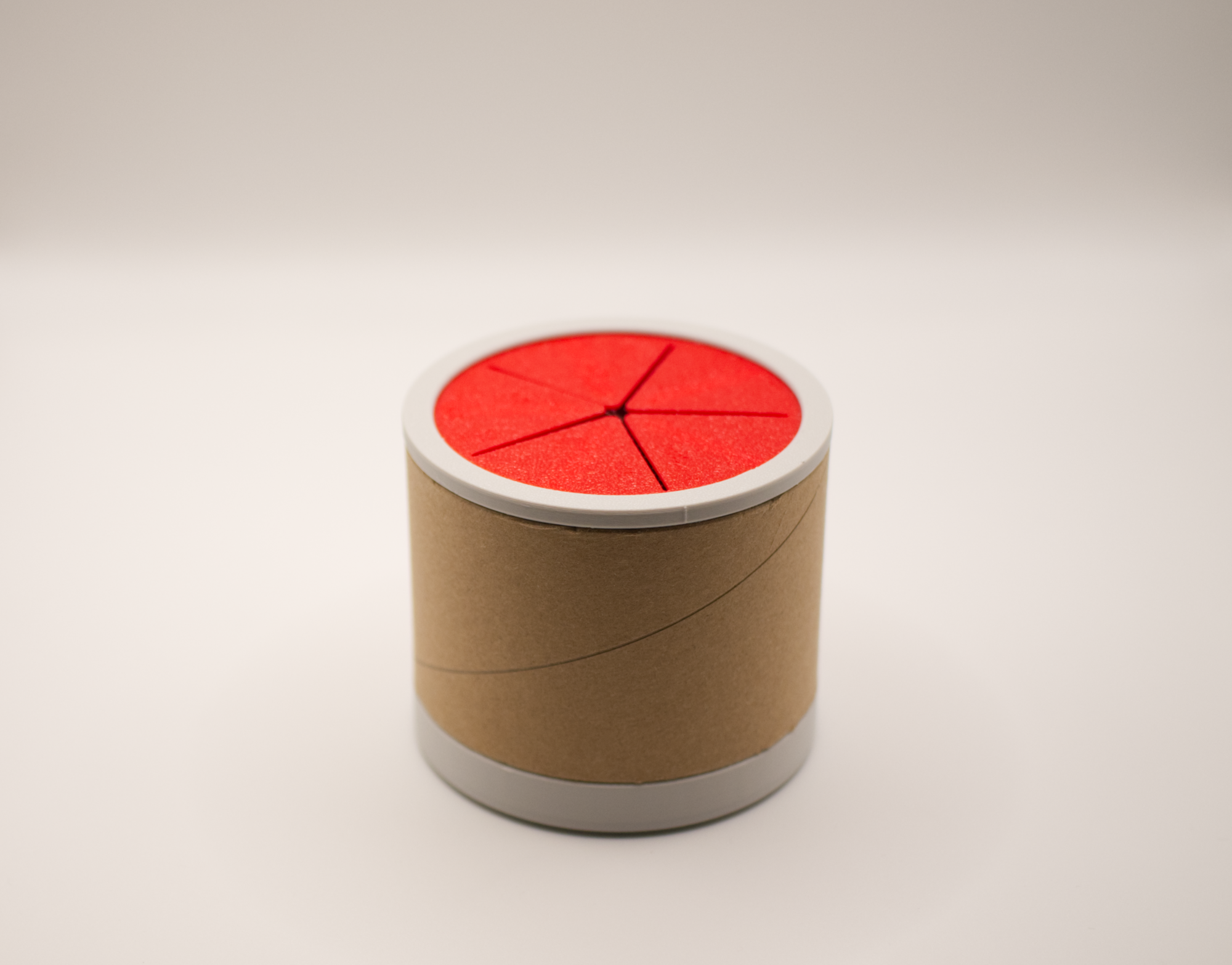
TL;DR Keeps small plastic scraps from drilling, deburring, filing, trimming and other post-processing tasks contained at the workbench. The flexible TPU diaphragm lets you push scraps directly into the bin and can also help wipe small pieces of plastic or adhesive vinyl from tools. Part of the ReSpool – WorkBench line and designed around upcycled filament spool cores. Not intended for complete support structures or large pieces of waste. What It Is ReSpool – ScrapeBin is a compact collection bin for the small scraps created while cleaning and finishing 3D-printed parts. Instead of allowing tiny pieces of filament, burrs and trimming waste to spread across the workbench or fall onto the floor, ScrapeBin provides a dedicated place to collect them while you work. Like the other projects in the ReSpool family, part of its structure reuses the cardboard cores found inside filament refill spools. The Problem Post-processing 3D prints generates surprisingly persistent little pieces of waste. Drilling holes, deburring edges, filing surfaces, trimming with a hobby knife or removing small imperfections can leave tiny plastic fragments scattered across the workbench. Some of them also remain attached to pliers, blades and deburring tools. ScrapeBin keeps this type of waste concentrated in one place instead of letting it gradually spread around the workspace. How It Works The top of ScrapeBin incorporates a flexible TPU diaphragm. Small scraps can simply be pushed through the diaphragm and into the container. Because the diaphragm remains mostly closed when nothing is passing through it, it also helps prevent the lightweight contents from escaping again. The flexible surface can additionally be used as a convenient wiping point for tools. Bring the tool close to the diaphragm and use the flexible edge to help release small pieces of filament or other debris into the bin. This can be particularly useful with small pieces of self-adhesive vinyl, which often remain attached to blades or other tools. For emptying the container, the upper assembly can be opened completely. Typical Uses ScrapeBin is useful when working with: Pliers and flush cutters Edge deburring tools Files Hobby knives / X-Acto-style knives Small drills Tweezers Adhesive vinyl General 3D-print post-processing It is designed for small scraps and shavings, rather than complete support structures or large failed prints. Key Features Flexible TPU diaphragm Push scraps directly into the container while helping keep the contents inside. Tool-cleaning surface The diaphragm can help remove small pieces of filament and other debris that remain attached to tools. Compact workbench footprint Designed to remain close to the area where post-processing is being carried out. Upcycled spool core Reuses the cardboard core from a filament refill spool instead of printing an unnecessarily large plastic container. Part of ReSpool – WorkBench Designed to work visually and functionally alongside the other tools and organisers in the WorkBench series. Materials The rigid components can be printed in: PLA PETG The diaphragm should be printed in: TPU The flexibility of the TPU is an important part of the design and allows the diaphragm to deform naturally when scraps are pushed through it. Assembly Print the rigid components in PLA or PETG. Print the diaphragm in TPU. Install the cardboard filament spool core between the printed components. Attach the TPU diaphragm to the upper ring. Check that the diaphragm remains free to flex towards the inside of the container. Avoid applying adhesive to areas of the diaphragm that need to flex. Assemby - Where to apply the glueSim. Eu acrescentaria isso sobretudo em Key Features e repetiria de forma prática em Assembly and practical use, porque é uma opção interessante e não uma peça obrigatória. Optional non-slip base The ScrapeBin can be fitted with an optional non-slip base. A laser-cut profile is included for an 78 mm diameter disc, which can be cut from materials such as EVA foam or cork. Both options provide extra grip on the workbench while also adding a softer contact surface underneath the bin. If you do not have access to a laser cutter, you can simply 3D print an 78 mm diameter disc, approximately 1–2 mm thick, using a suitable flexible material. The non-slip base is optional and does not affect the normal use of the ScrapeBin. Print Settings The supplied print profile uses standard settings and is the recommended starting point. No unusual print settings should be required. Compatibility Designed for use with the ReSpool WorkBench collection. The organizer can also be used independently as a compact desktop or workshop storage solution. Design Philosophy The idea behind ReSpool is simple: If part of an object already exists, why print it again? Filament refill spools leave behind surprisingly useful cardboard cylinders. Incorporating them into new objects reduces the amount of filament required while giving something normally discarded a new function. ScrapeBin applies that idea to one of the smallest — but most frequent — annoyances of 3D-print post-processing.
Tags
Diseñador
Jorge Rui