
RoboDog Carrier Modular Back Rail for the Rover X1
Peso
554g
Tiempo
19h 20m
Precio
Cotiza este producto por WhatsApp
Contáctanos y te damos el precio según color y acabado
Las dimensiones dependen del diseño. Confirmamos las medidas exactas por WhatsApp.
Descripción
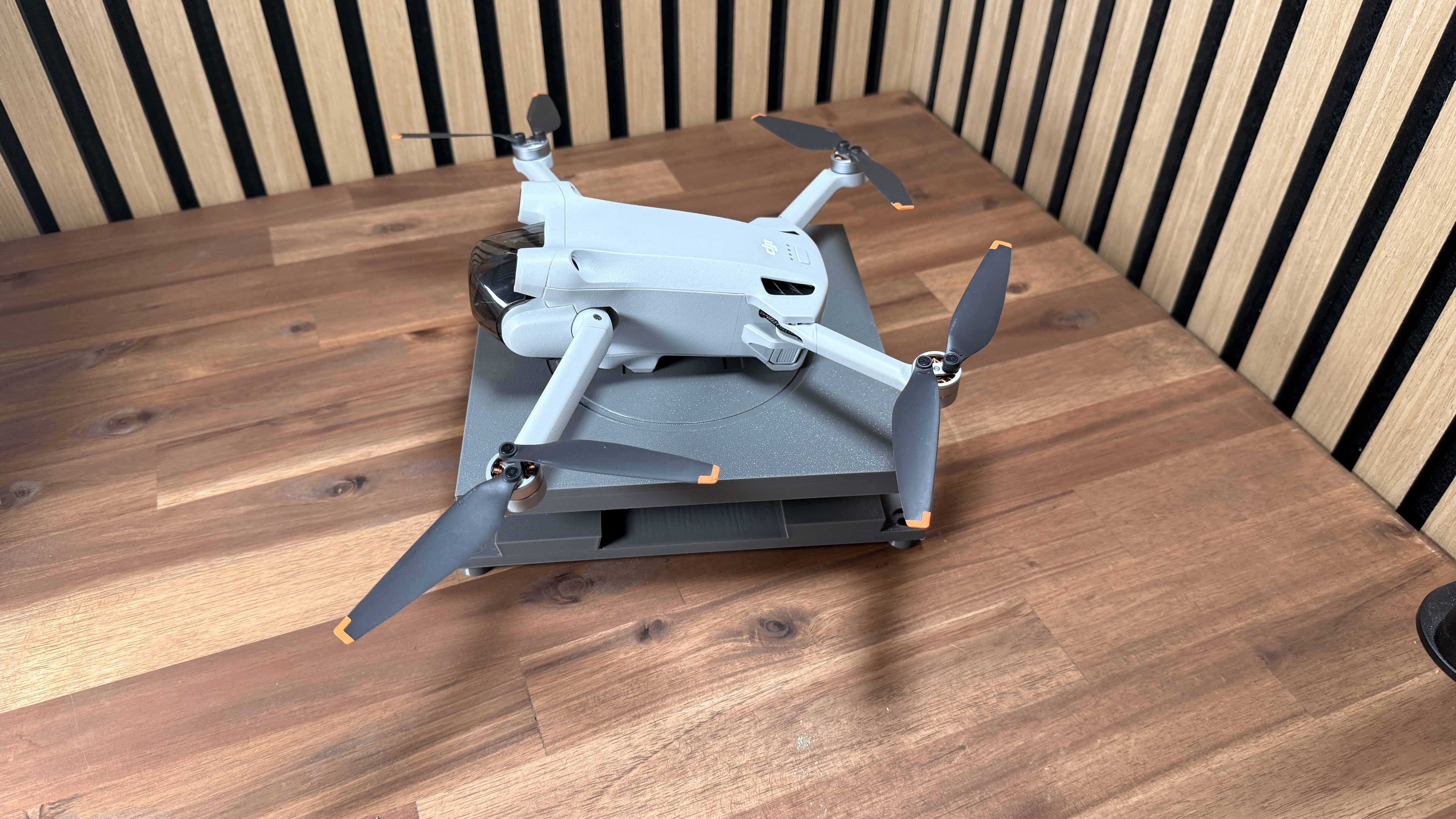
RoboDog Carrier — Modular Back Rail for the Rover X1: Drone Landing Pad + Action Cam Armor Entry for the RoboDog Mod Challenge, Category 2 (Functional Innovation). Designed for the INFFNI/DOBOT Rover X1 — full credit to INFFNI for the official Rover X1 model (makerworld.com/models/2897921, CC BY-NC) and to the contest hosts. This upload contains only my own geometry, dimensioned against the official STEP files. Turn your robot dog into an aircraft carrier. One base rail bolts to the Rover X1's back — and mission modules slide on via dovetails: a drone carrier with take-off/landing platform for the DJI Mini 3 / Mini 3 Pro, and an armored action cam mount for the DJI Osmo Action series. Swap modules in seconds, no tools needed once the thumb screws are out. How it mounts The base rail uses the Rover X1's official accessory hole pattern on the Center Upper Cover: 4 reinforced bosses, 143.9 × 184.2 mm grid, M5. Four Ø14 standoffs bridge the cover's curvature — no modification to the robot, fully reversible. Measured directly from the official STEP file. Module A — Drone Carrier (2 parts) Cradle: a tray sized for the folded Mini 3 Pro (inner 91 × 149 × 30 mm, gimbal protector on) — safe transport while the dog walks. Landing platform: a 180 × 180 mm pad with engraved H-marking that presses onto the cradle's four Ø7.8 pins. Take off from the dog's back; with DJI Precision Landing (take off from the pad, keep the rover parked) the drone comes back to it, too. Module B — Cam Armor A wedge-shaped housing (45° front) with a GoPro 3-finger mount on top — the DJI standard frame clicks straight in, held by a single M5×45 thumb screw. Tank-turret look, protects the cam, adjustable angle. Parts & hardware Printed partQtyNoteBase rail1160 × 200 mm, 2 dovetail rails, brass insertsDrone cradle1tray + 4 corner bossesLanding platform1180 × 180, press-fitCam armor1GoPro 3-finger mountHardwareQtySocket head screw DIN 912 M5×16 + M5 washers4 + 4Threaded insert Ruthex RX-M5×9.5 (module lock, Ø 6.4 hole)2Socket head screw DIN 912 M5×16 (module lock)2GoPro thumb screw M5×451The module lock screws run through Ø5.5 clearance holes into brass threaded inserts in the dovetail rails — swap modules as often as you like, the threads never wear out. Printing PETG, 0.2 mm, 4–6 walls, 25–40 % gyroid, no supports on any part. Verified fit tolerance 0.25 mm — dovetails slide with slight play, the lock screw removes it. Payloads are light (drone 249 g, cam 146 g) — the fit is what matters, not strength. Note: one product image and the lift-off video are AI-generated concept visualizations (labeled as such in the image). All other photos show real printed parts on my bench; the CAD renders show the assembly on the official Rover X1 model. More models, updates and print profiles: makerworld.com/de/@Stuibie RoboDog Carrier — Modulare Rücken-Schiene für den Rover X1: Drohnen-Landeplattform + Action-Cam-Panzer Beitrag zur RoboDog Mod Challenge, Kategorie 2 (Functional Innovation). Entworfen für den INFFNI/DOBOT Rover X1 — voller Credit an INFFNI für das offizielle Rover-X1-Modell (makerworld.com/models/2897921, CC BY-NC) und an die Contest-Hosts. Dieser Upload enthält ausschließlich eigene Geometrie, bemaßt gegen die offiziellen STEP-Dateien. Mach deinen Roboterhund zum Flugzeugträger. Eine Basisschiene wird auf den Rücken des Rover X1 geschraubt — Missionsmodule schieben sich per Schwalbenschwanz auf: ein Drohnen-Carrier mit Start-/Landeplattform für die DJI Mini 3 / Mini 3 Pro und eine gepanzerte Action-Cam-Halterung für die DJI-Osmo-Action-Serie. Modulwechsel in Sekunden. Befestigung Die Basisschiene nutzt das offizielle Zubehör-Lochbild des Center Upper Cover: 4 verstärkte Bosse, Raster 143,9 × 184,2 mm, M5. Vier Ø14-Standoffs überbrücken die Cover-Wölbung — keine Modifikation am Roboter, voll reversibel. Direkt aus dem offiziellen STEP vermessen. Modul A — Drohnen-Carrier (2 Teile) Cradle: Wanne für die gefaltete Mini 3 Pro (innen 91 × 149 × 30 mm, mit Gimbal-Schutz) — sicherer Transport, während der Hund läuft. Landeplattform: 180 × 180 mm mit gravierter H-Markierung, aufgesteckt auf vier Ø7,8-Zapfen. Start vom Hunderücken; mit DJI Precision Landing (von der Plattform starten, Rover stehen lassen) landet die Drohne auch wieder darauf. Modul B — Cam-Panzer Keilförmiges Gehäuse (45°-Front) mit GoPro-3-Finger-Aufnahme — der DJI-Standardrahmen klickt direkt ein, gehalten von einer M5×45-Knaufschraube. Panzerturm-Optik, schützt die Kamera, Winkel einstellbar. Teile & Material DruckteilAnzahlHinweisBasisschiene1160 × 200 mm, 2 Schwalbenschwanz-Schienen, Messing-InsertsDrohnen-Cradle1Wanne + 4 Eck-BosseLandeplattform1180 × 180, gestecktCam-Panzer1GoPro-3-Finger-AufnahmeKaufteileAnzahlZylinderkopfschraube DIN 912 M5×16 + U-Scheiben M54 + 4Gewindeeinsatz Ruthex RX-M5×9,5 (Modul-Sicherung, Ø 6,4)2Zylinderkopfschraube DIN 912 M5×16 (Modul-Sicherung)2GoPro-Knaufschraube M5×451Die Sicherungsschrauben laufen durch Ø5,5-Durchgänge in Messing-Gewindeeinsätze in den Schwalbenschwanz-Schienen — beliebig oft wechseln, ohne Gewindeverschleiß. Druck PETG, 0,2 mm, 4–6 Wände, 25–40 % Gyroid, alle Teile stützenfrei. Getestete Passungstoleranz 0,25 mm — Schwalbenschwänze gleiten mit leichtem Spiel, die Sicherungsschraube nimmt es heraus. Nutzlasten sind leicht (Drohne 249 g, Cam 146 g) — entscheidend ist die Passung, nicht die Festigkeit. Hinweis: Ein Produktbild und das Start-Video sind KI-generierte Konzept-Visualisierungen (im Bild entsprechend gekennzeichnet). Alle anderen Fotos zeigen real gedruckte Teile; die CAD-Renderings zeigen die Baugruppe auf dem offiziellen Rover-X1-Modell. Mehr Modelle, Updates und Druckprofile: makerworld.com/de/@Stuibie
Tags
Diseñador
JoergsDruckstube