
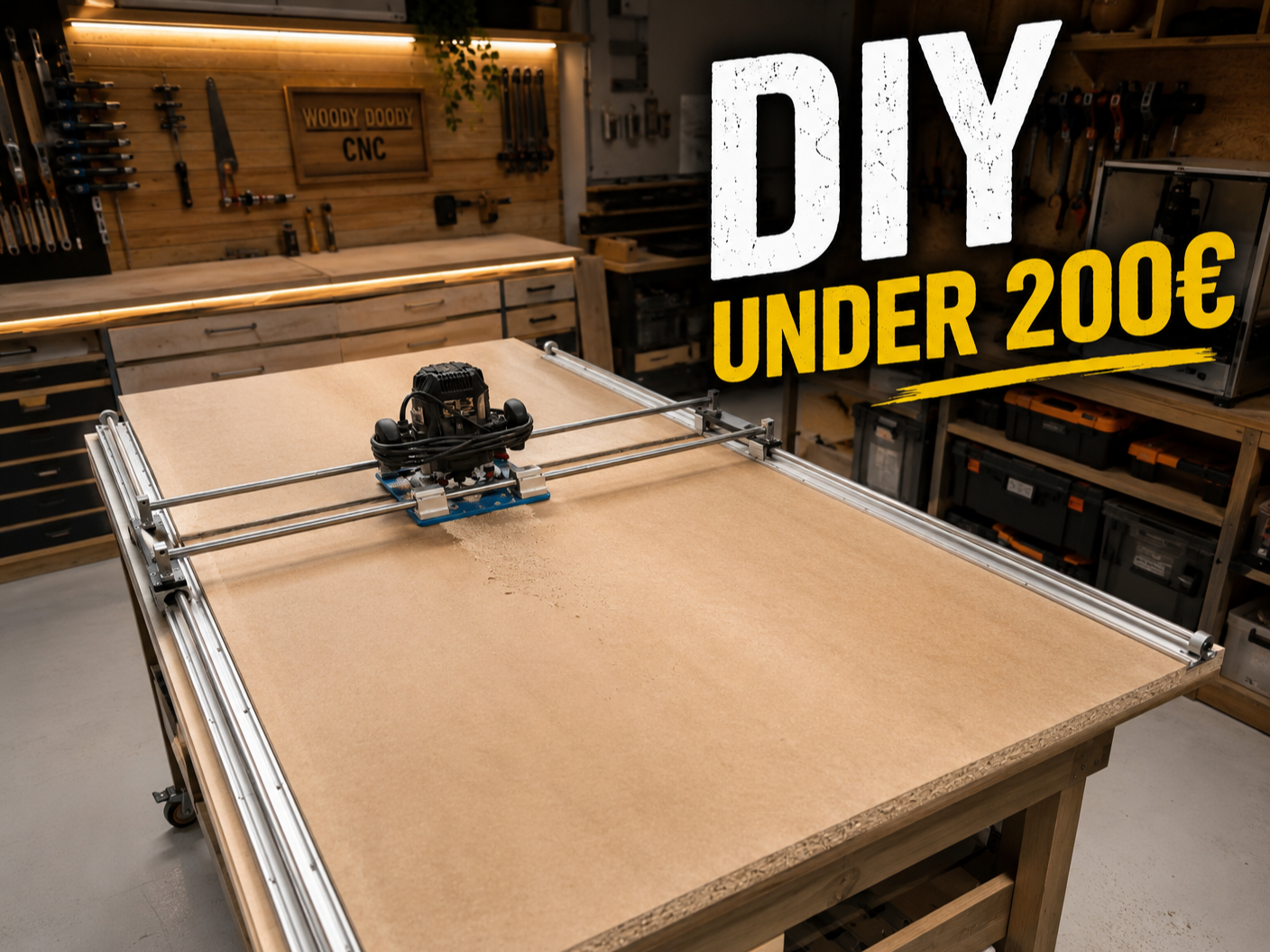
BUDGET DIY Router Sled - UNDER 200€
Peso
276g
Tiempo
8h 3m
Precio
Cotiza este producto por WhatsApp
Contáctanos y te damos el precio según color y acabado
Las dimensiones dependen del diseño. Confirmamos las medidas exactas por WhatsApp.
Descripción
DIY Heavy Duty Router Sled – Slab Flattener Under €200 This project is a large DIY router sled designed for flattening wooden slabs, tabletops, worktops and other oversized pieces of wood that are too large for a conventional planer. The main goal of this project was simple: build a strong, accurate and large-capacity slab flattening system without spending hundreds or thousands of euros on a commercial solution. The complete setup can be built for approximately 200 €, depending on local prices and the components you already have. How It Works The system uses linear rails to allow the router to move smoothly in both directions across the entire work area. The router can be moved freely along the X and Y axes, while a large 40 mm router bit removes material from the surface of the workpiece. By making multiple passes across the slab, you can create a flat and even surface even on very large pieces of wood. Components Used My build uses commonly available and relatively inexpensive components: linear rails and linear bearings PARKSIDE router (you can use any available but you will need to change printed adapter for it) 40 mm diameter flattening router bit Screws and mounting hardware Linear rail end stops 3D printed mounting adapters thread inserts Important – Threaded Inserts For sufficient strength and long-term durability, heat-set threaded inserts must be installed into the 3D printed plastic parts at the specified mounting points. Do not screw the bolts directly into the printed plastic, as repeated tightening, vibration and mechanical loads may damage the threads over time. The threaded inserts provide a much stronger and more reliable connection between the printed adapters, linear rail components and router assembly. The 3D printed parts are the key components that connect the linear motion system and router together. Recommended Printing Material I recommend printing the structural components from PETG For even higher mechanical strength, materials such as ASA, ABS or suitable engineering filaments can also be used.. Why Build a Router Sled? Large thickness planers and professional slab flattening machines can be very expensive and often have limited working width. A router sled offers a simple alternative. The maximum workpiece size is mainly determined by the length of the linear rails you choose, meaning the same basic design can be adapted for smaller or much larger projects. The linear rail system also provides smooth movement and makes it much easier to achieve consistent results compared with a simple wooden router sled. Budget-Friendly Workshop Tool One of the main advantages of this design is the price. Using affordable VEVOR linear components, a PARKSIDE router and 3D printed adapters makes it possible to build a surprisingly capable slab flattening setup for around 200 €. It is a simple DIY solution that can turn an inexpensive handheld router into a large-format woodworking machine. If you build one, feel free to share your Make and your modifications. I would love to see what other makers create with this design!
Tags
Diseñador
GBGNCO