
ReSpool Bag Tower - Modular Upcycled Bag Dispenser
Peso
350g
Tiempo
9h 36m
Precio
Cotiza este producto por WhatsApp
Contáctanos y te damos el precio según color y acabado
Las dimensiones dependen del diseño. Confirmamos las medidas exactas por WhatsApp.
Descripción
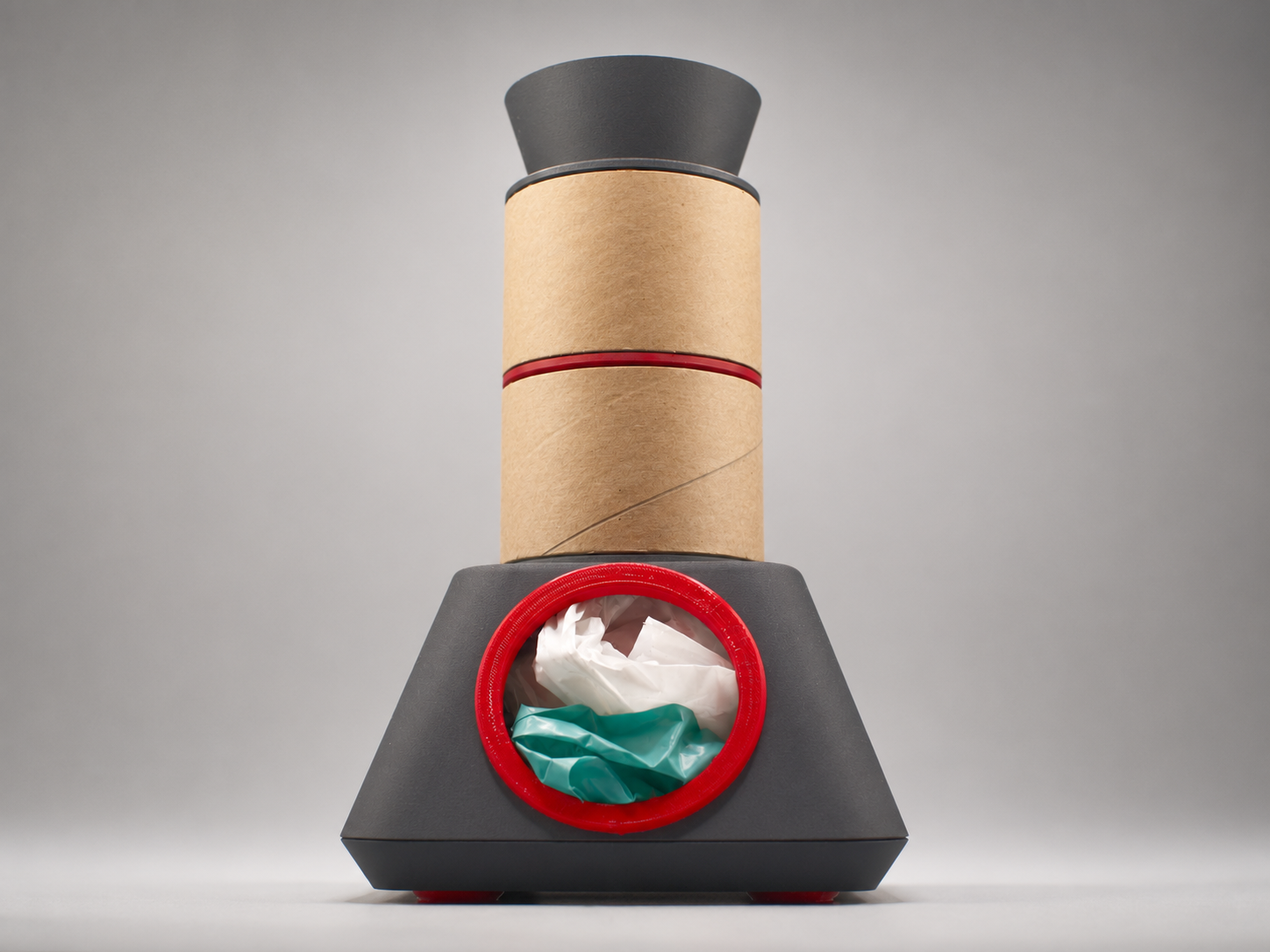
What It Is The ReSpool Bag Tower is a modular storage and dispensing system for reusable plastic bags. Its structure incorporates the cardboard cores found inside filament refill spools, parts that would normally be discarded after the filament has been used. Instead of printing an unnecessarily large container, the design gives these cardboard cores a practical second life. Each core becomes part of the body of the dispenser, reducing the amount of filament required while increasing storage capacity. The system is modular: add or remove sections according to the number of bags you want to store and the space available. A vertical configuration uses very little floor space, while the weighted base keeps the tower stable during everyday use. Upcycling by Design This project was developed around a simple principle: sustainability should be integrated into the design process, not added as an afterthought. By identifying a common piece of waste—the cardboard core from a filament refill spool—and turning it into a structural component, the ReSpool Bag Tower transforms discarded material into a useful resource. The project balances sustainability with: Practical everyday functionality Comfortable and safe interaction Reduced filament consumption Modular capacity Very Simple assembly An experimental approach that can evolve into new configurations The objective was not simply to make something new, but to create an object with a clear purpose while encouraging makers to reconsider the materials they normally throw away. Feel free to experiment with as many colors as you like, it will look fantastic! Embrace the upcycling spirit and use your leftover filament to create a truly unique combination. Key Features Upcycled structure: reuses cardboard cores from filament refill spools. Modular capacity: add as many sections as needed. Space-saving vertical design: provides generous storage without occupying much kitchen floor space. Weighted base: designed with additional mass for improved stability. Soft dispensing outlet: the flexible TPU nozzle protects both your hand and the plastic bags. Non-slip feet: TPU feet improve grip and help protect the supporting surface. Material-efficient construction: the reused cardboard sections replace a large amount of printed material. Easy loading: bags are inserted through the opening at the top and removed from the outlet near the base. Materials Rigid Parts The base, connectors and remaining structural parts can be printed in PLA, PETG or another rigid material of your choice. For the example shown, I used carbon-fibre-filled PLA. Both PLA-CF and PETG-CF can provide an especially clean surface finish, but standard PLA or PETG will also work well. Flexible Parts The feet and dispensing nozzle are designed to be printed in TPU. I used TPU with a Shore hardness of 95A, although another suitable flexible filament may also work, the softer the better. TPU was selected for the outlet because this is the area that comes into contact with your hand and with the bags. If you don't like TPU or don't have it, drop me a message and I will provide a special part for the outer ring. The flexible surface: Feels more comfortable when reaching for a bag, does not scratch your hand Avoids sharp rigid edges Helps prevent thin plastic bags from tearing during removal Important TPU Preparation Dry the TPU for at least 12 hours before printing, even if the spool is new. TPU can absorb moisture during manufacturing, storage and transport. Printing wet TPU may cause stringing, bubbles, rough surfaces and weak or inconsistent areas. Proper drying makes a significant difference to the quality of the finished part. Printing the TPU outer ring The outer ring is printed in TPU with PLA support material. This combination works particularly well because TPU does not bond strongly to PLA. The PLA supports the flexible part during printing but can be separated afterwards without permanently attaching to it. After printing, flex and twist the TPU part firmly. The rigid PLA support will normally crack and break into smaller sections, while the TPU bends without damage. Remove the broken support material gradually. Be careful: some broken PLA sections may have sharp edges. Wear gloves if necessary and do not direct the part or fragments towards your face while twisting it. Assembly Print the base, modular connectors, TPU feet and TPU outlet nozzle. Remove the PLA supports, be patient... Glue the TPU feet in the base. Fit the flexible outer ring in its position. Place the first cardboard spool core on the base. Use the printed connecting sections to stack additional cardboard cores. Finish the tower with the upper loading section. Add only as many modules as you need. From a practical point of view, approximately six sections already create a tall dispenser with substantial storage capacity. When building a particularly tall configuration, place the dispenser on a level surface and check its stability before filling it completely. How to Use Insert folded or loose plastic bags (works best with folded bags) through the opening at the top. Folded bags should normally fall through the central channel under their own weight. Looser bags may need to be pushed down gently until they reach the lower section. If a bag becomes trapped inside the channel, use a smooth, blunt tool to guide it down. Avoid sharp tools that could puncture or tear the plastic.Remember tat you can alway detach any ring Remove the bags individually through the flexible TPU outlet near the base. As the dispenser fills, you can either add another modular section to increase its capacity, or print another ReSpool Bag Tower Design Notes The vertical configuration was selected because it offers a good balance between capacity and occupied space. The base is intentionally more substantial than the upper components, lowering the centre of gravity and improving stability. The contrast between the reused cardboard cores, rigid printed components and soft TPU interaction points is an important part of the design. Each material is used where its characteristics provide a functional advantage. This project also reflects an experimental design mindset: test an idea, observe how it behaves in everyday use and allow the system to evolve. Feel free to experiment with as many colors as you like, it will look fantastic! Embrace the upcycling spirit and use your leftover filament to create a truly unique combination. Future Plans A horizontal version may be explored in the future. While the current vertical arrangement makes better use of limited floor space, a horizontal configuration could work well inside cabinets, under shelves or in other locations where vertical clearance is limited. Other possible developments include: Alternative base configurations Wall-mounted versions Modules for other cardboard-core dimensions Additional heights and decorative finishes If you have a particular configuration in mind, leave a comment. Community feedback is often the starting point for the next version. Changelog 2026-07-29 — Initial Release Initial modular vertical configuration Upcycled filament-refill cardboard core structure Weighted printed base Flexible TPU dispensing nozzle TPU non-slip feet
Tags
Diseñador
Jorge Rui